Your first days adrift without the panic
A relaxed beginner primer for Raft that covers what to gather, what to craft first and how to keep your little platform safe while you find your rhythm.
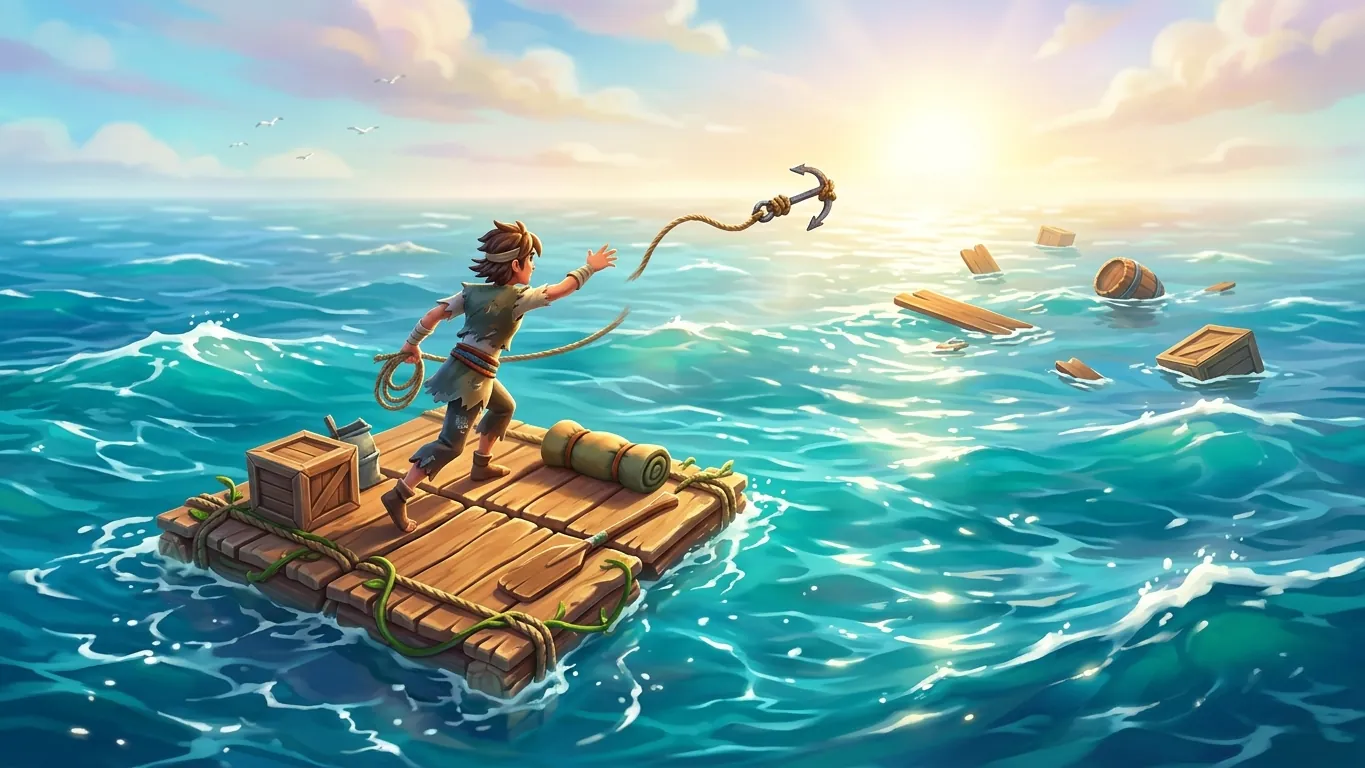
Start with the hook and a calm mindset
When you first open your eyes in Raft, the situation looks a little bleak. You have a tiny square of wood, a plastic hook and a lot of water in every direction. The good news is that the ocean is generous. Debris floats towards you constantly, and your hook is the tool that turns that drift into a future home.
Before anything else, take a breath and get used to the throwing motion. Hold to charge, release to cast, then reel in once the hook lands near something useful. Aim slightly ahead of moving items rather than right at them, because the current keeps carrying everything past your raft. After a few minutes, it becomes almost meditative.
It also helps to remember that the early game is meant to feel tight. Your hunger and thirst meters will drop, the shark will show up, and you will probably lose a plank or two. None of that means you are playing badly. It is simply the opening chapter of your story at sea.
Planks, plastic and palm leaves: what to grab first
In the beginning, almost everything is worth collecting, but a few materials matter more than others. Planks are the backbone of your raft and most early crafts. Plastic goes into cups, tools and many basic items. Palm leaves become thatch and rope, which you will need surprisingly often. Floating barrels are little treasure chests that can contain a mix of supplies, so it is worth stretching for them when they drift past.
Try not to expand your raft too quickly in the first hour. A larger platform catches more debris, but it also gives the shark more edges to bite, and every new foundation costs planks you might want for tools. A small, tidy raft that you can watch from one spot is much easier to defend while you are still learning.
Keep a little stockpile of each basic material on hand. Having spare planks and thatch when something breaks feels far better than scrambling while your floor disappears.
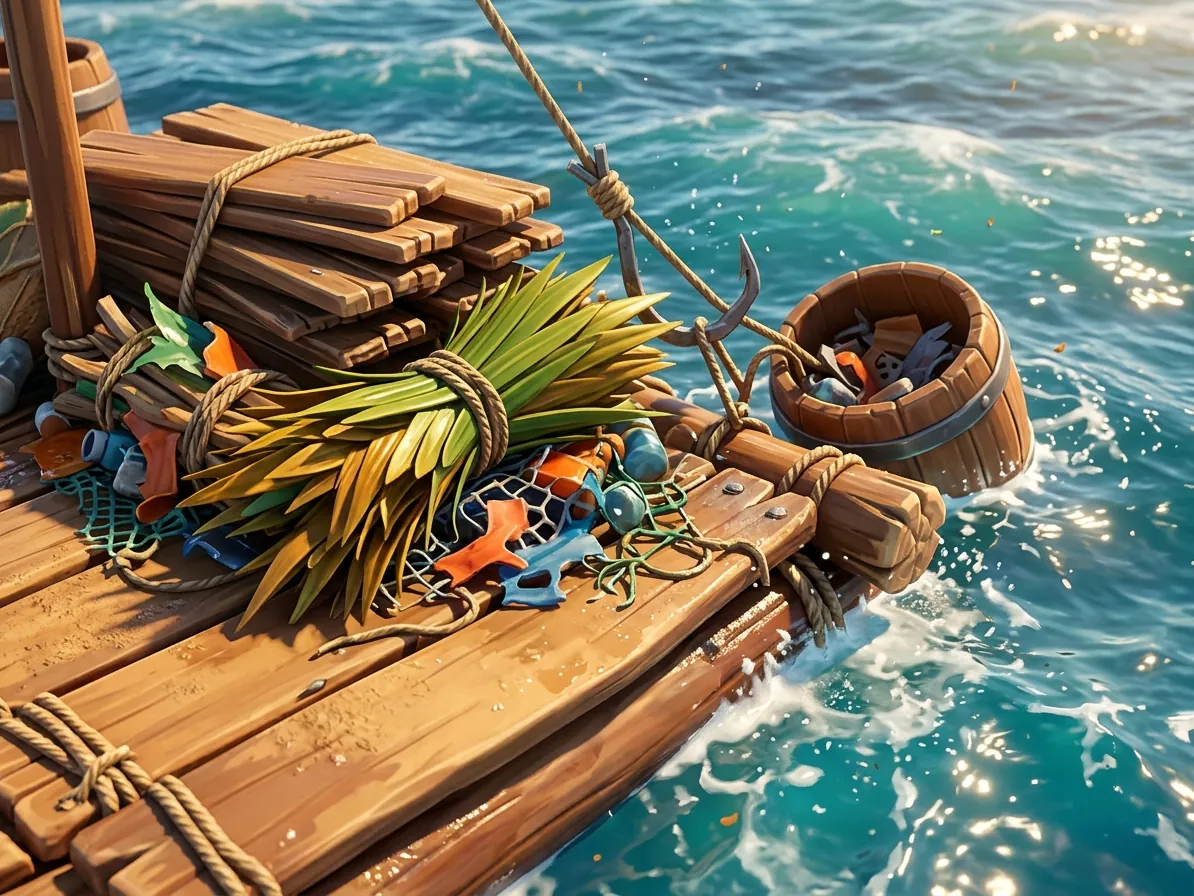
A simple order for your first crafts
There is no single correct build order, but this sequence keeps most new players fed, hydrated and reasonably safe.
- 01
Cup and simple purifier
Thirst is the meter that usually catches beginners off guard. A cup lets you scoop seawater, and a simple purifier with a bit of fuel turns it into something you can drink.
- 02
Spear and hammer
A spear helps you push the shark away when it nibbles your raft, and a hammer lets you repair damaged foundations before they fall apart.
- 03
Fishing rod and grill
A basic rod gives you a steady food source while you wait for debris, and a simple grill lets you cook what you catch.
- 04
Research table
Once the basics are covered, a research table opens up new recipes as you learn from the materials you collect.
Living alongside the shark
The shark is part of the Raft experience from the very start. It circles your platform and, every so often, decides that one of your foundations looks tasty. You will usually notice it chewing on an edge. If you are quick, you can jab it with your spear until it swims off, then repair the damage with your hammer.
A few habits make this much less stressful. Keep your most important crafting stations away from the edges, so a lost foundation does not take a purifier or grill with it. Check the perimeter whenever you finish a task. And if you need to jump into the water for something, try to do it right after the shark has been chased away, when you have a short window of relative calm.
Later in the game, you can protect your edges with reinforced foundations, which takes a lot of pressure off. Until then, think of the shark as a slightly annoying neighbour you learn to work around.
Pacing yourself in the early game
It is tempting to rush towards sails and islands as soon as possible, but your first days are the best time to learn how everything fits together. Watch how quickly your hunger and thirst drop. Notice which materials you always seem to run out of. Find a comfortable rhythm of hooking, fishing, cooking and repairing.
Once that rhythm feels natural, you are ready to grow. Add a few more foundations, put up some simple walls or a roof, and start thinking about where you want your kitchen and your storage to live. That is when the raft slowly stops being a survival platform and starts becoming a home.
Most importantly, enjoy the quiet moments. The sound of the waves, the sun sliding across the sky and the first fish sizzling on your grill are a big part of why so many players love this game.
Related articles
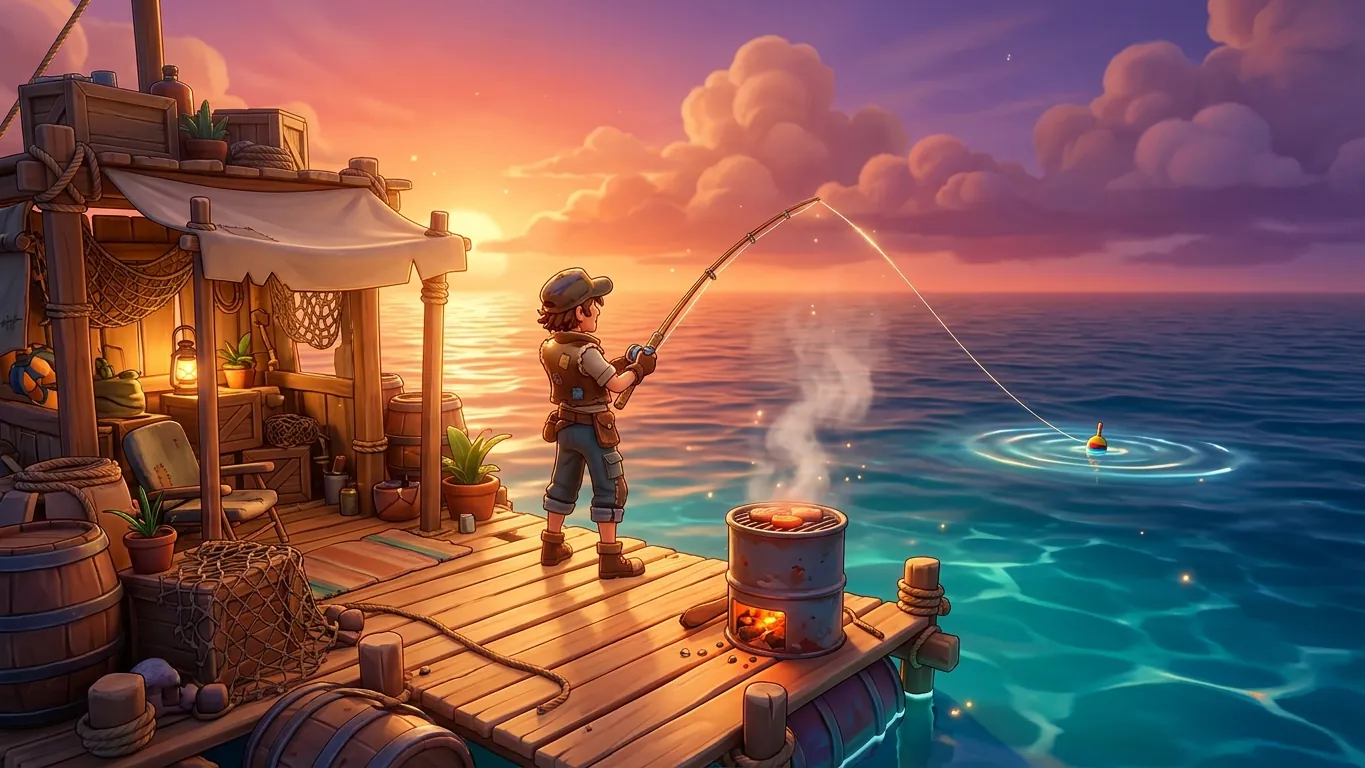 Casting a line from your floating front porch
A friendly Raft fishing guide covering rods, casting, timing, cooking your catch and how to fit fishing into a relaxed routine on your floating home.
Read more
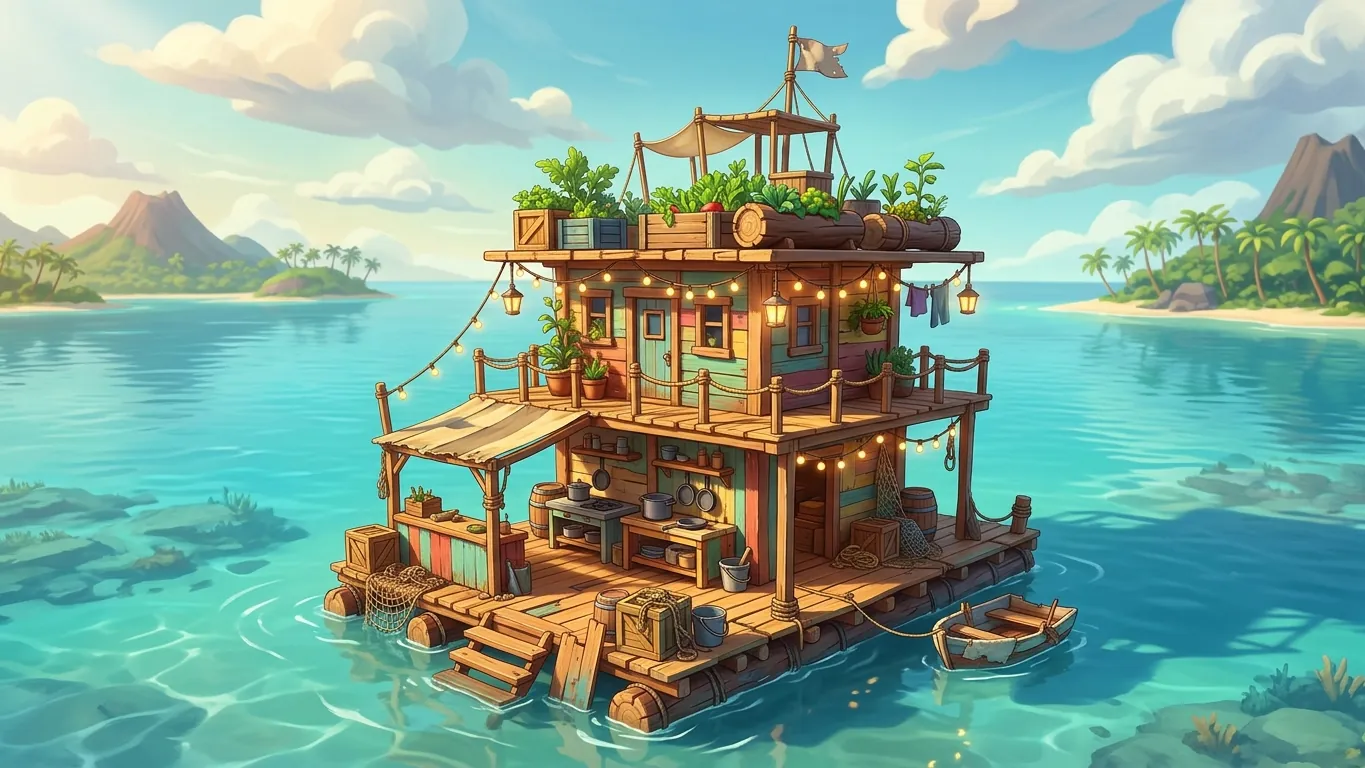 From survival platform to sunny houseboat
Ideas for designing a comfortable floating home in Raft, from a solid core and clear zones to multiple levels, gardens and personal decorative touches.
Read more
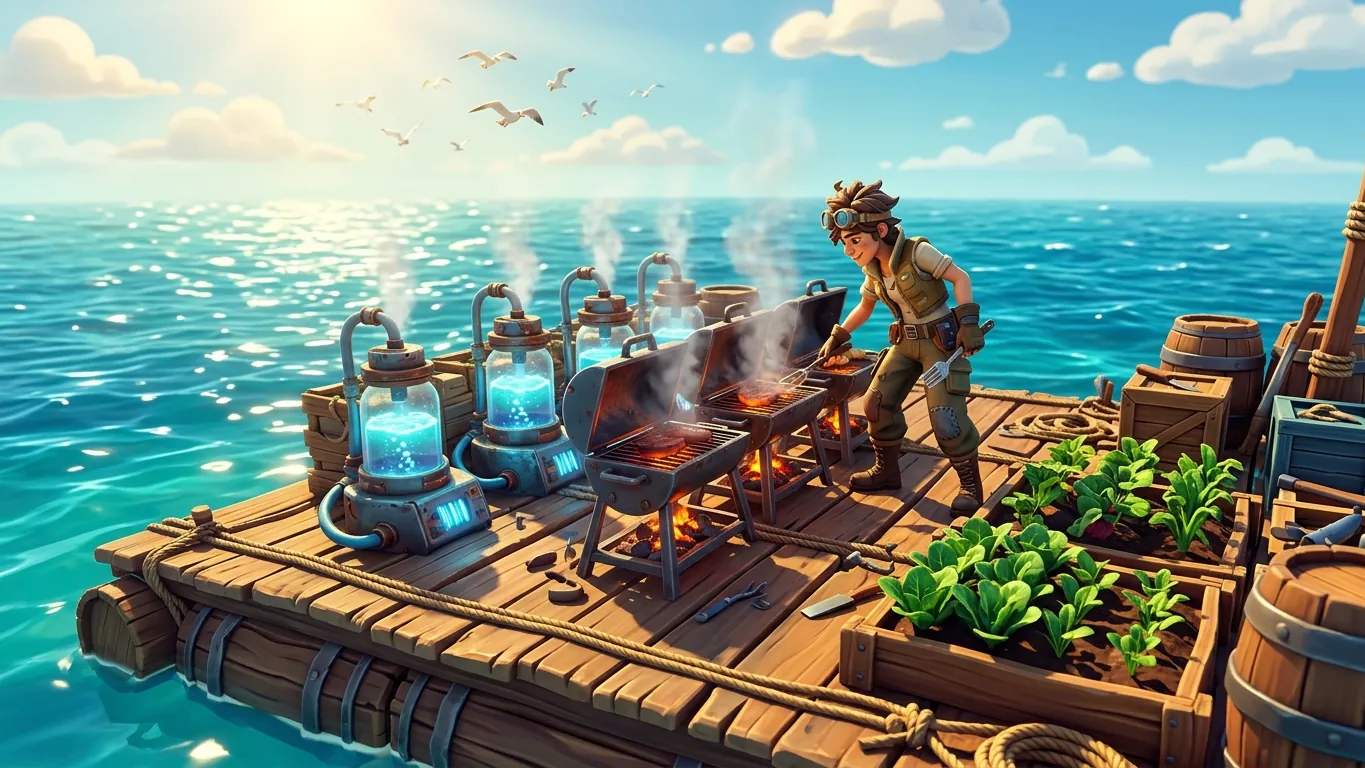 Never run dry on the open ocean
Practical tips for keeping hunger and thirst under control in Raft, with ideas for purifier setups, cooking, gardening and a relaxed daily routine.
Read more