Kitchen and water corner
Group purifiers, grills and food storage so cooking and drinking take only a few steps.
A practical look at planning a comfortable Raft base with clear zones, sensible expansion and plenty of personality, so your floating home feels as good as it looks.
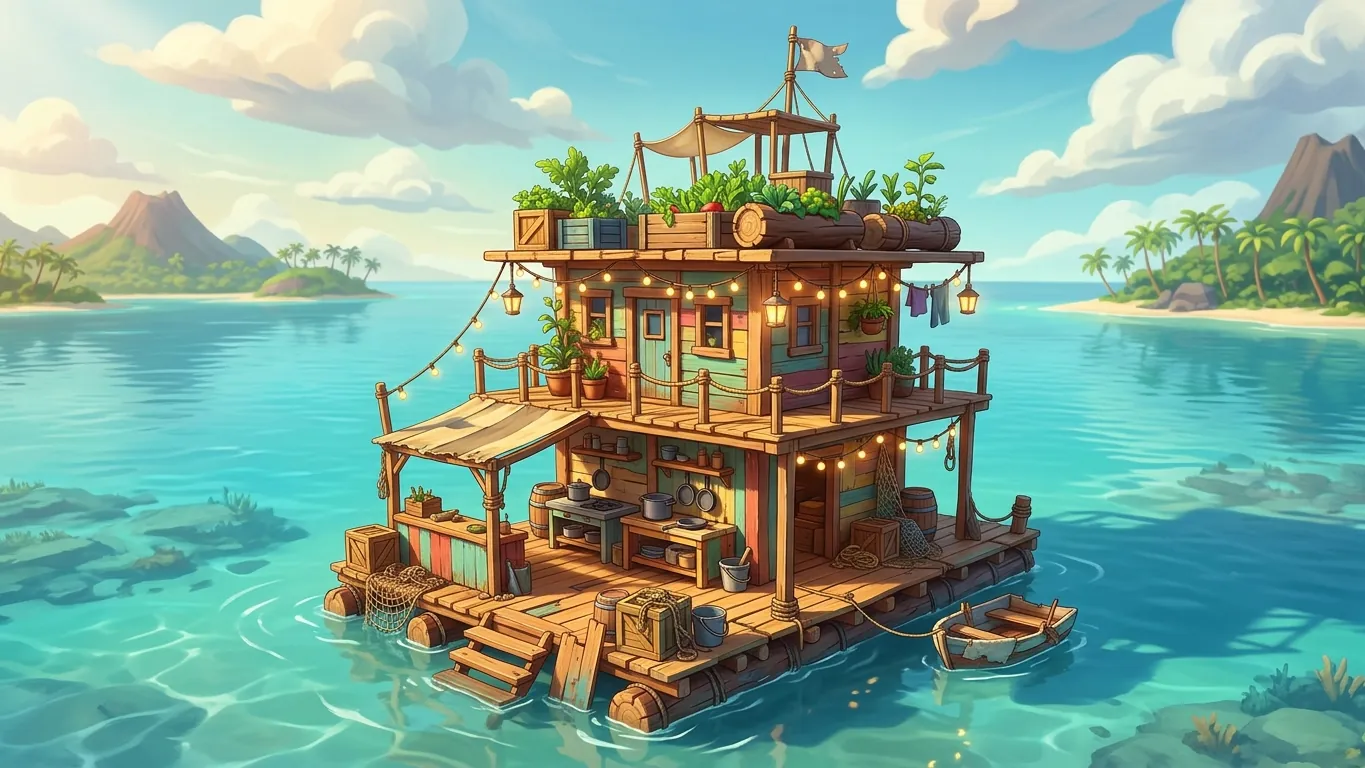
Every great floating home begins with a compact core. In the first stages of Raft, you have limited planks and a shark that loves edges, so it pays to build a square or slightly rectangular platform that you can easily watch and repair.
Place your essential stations near the centre: purifiers, grill, research table and a couple of storage boxes. This protects them if an outer foundation gets damaged, and it keeps your most frequent actions close together. You will thank yourself later when you are not running laps around the deck just to get a drink.
Once you can reinforce your foundations, expanding becomes much less stressful. Until then, keep growth steady and modest. A small, tidy base is easier to reshape later than a sprawling one with stations scattered everywhere.
Splitting your raft into clear areas makes daily life smoother and gives your build a natural layout.
Group purifiers, grills and food storage so cooking and drinking take only a few steps.
Keep crafting stations, the research table and material chests together for quick building sessions.
Crop plots and planters do well in a dedicated, easy to reach area where you can water and harvest in one pass.
A bed or two in a quieter, covered spot, perhaps with a view of the water, gives the raft a homely heart.
Sails, anchors and later the steering setup work best on an open area with room to move.
At some point, a flat raft starts to feel crowded. Instead of adding endless foundations, consider building up. Pillars, floors and stairs let you stack zones on top of each other: a kitchen on the main deck, bedrooms on the second floor and a garden or lookout on the roof.
Going vertical has practical benefits too. A smaller footprint means fewer edges to protect, and upper floors give you a better view of the horizon when you are looking for islands or debris. It also makes your raft look much more like a real houseboat from a distance.
Plan your stairs carefully so they do not block walkways, and leave some open space on the main deck for collecting items and moving around. A raft that is beautiful but awkward to walk on can quickly become frustrating during busy moments.
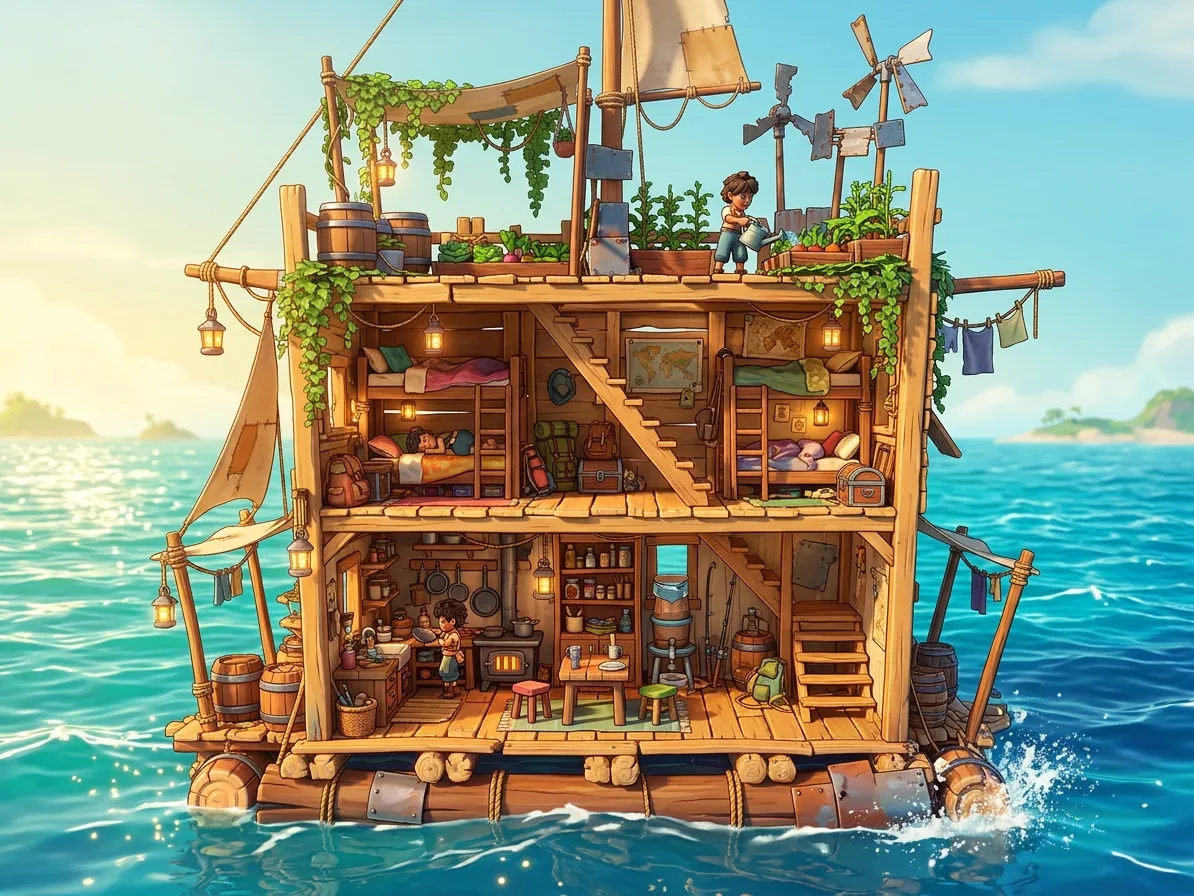
Your needs in Raft change as you progress. New stations, bigger engines and extra storage all need room. Leave some breathing space in each zone so you can add to it later without tearing everything apart.
It helps to think in rows and corridors. Line up your purifiers along one wall, keep storage boxes in a neat row and maintain a clear path between the main areas. When a new item unlocks, you will already know where it belongs.
Do not be afraid to rebuild either. Many players redesign their raft several times during a playthrough. Each version teaches you something about what works for your play style.
Once the practical side is in place, the fun really begins. Raft offers decorative options such as different wall and floor styles, paints, lights and furniture. A few thoughtful touches can turn a functional platform into a place that feels like yours.
Try using colour to mark zones, warm lights around the kitchen or a hammock with a sea view. In co-op, give each friend a small corner to decorate however they like. It is a lovely way to make a shared raft feel like a real floating neighbourhood.
Comfort is personal, so follow your own taste. Whether you prefer a rustic fishing hut or a bright, colourful village on the waves, the best floating home is the one you enjoy coming back to after a long day at sea.
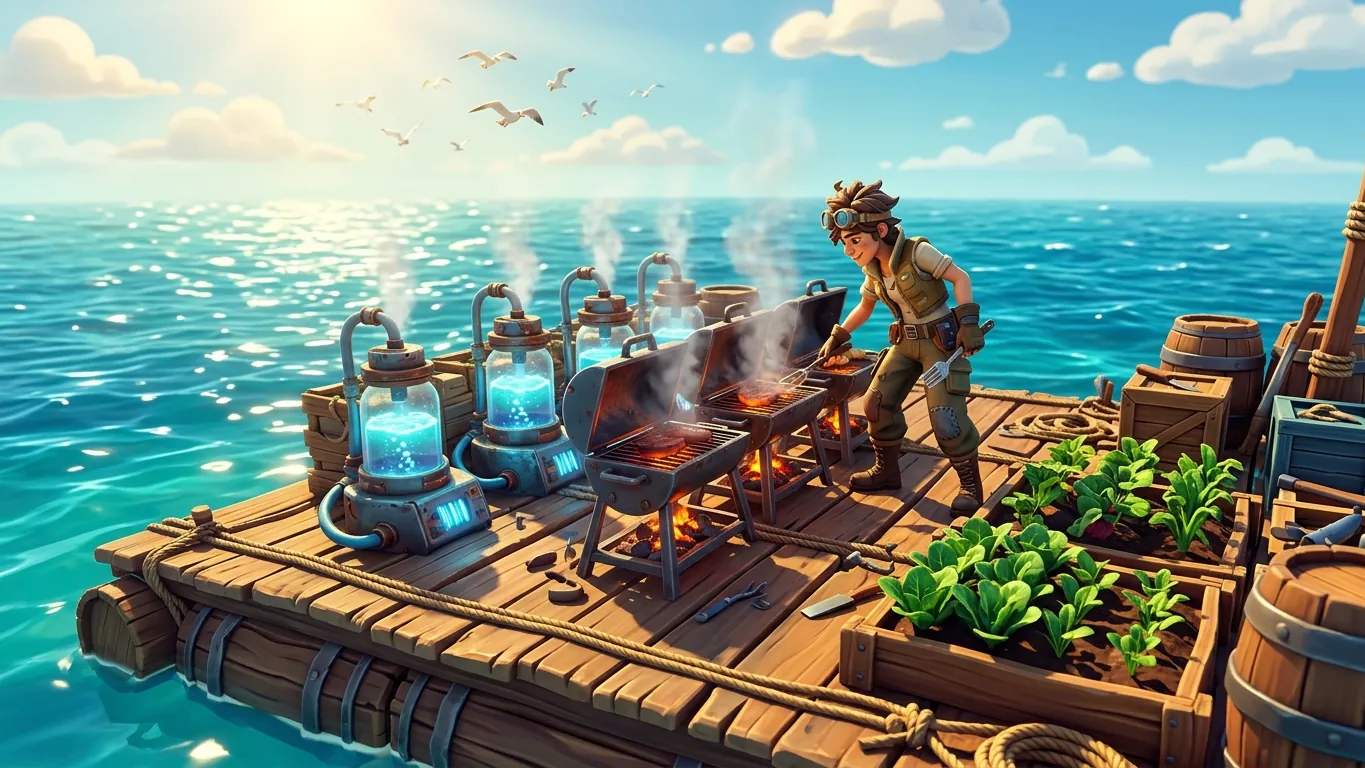 Never run dry on the open ocean
Practical tips for keeping hunger and thirst under control in Raft, with ideas for purifier setups, cooking, gardening and a relaxed daily routine.
Read more
 Taking the helm of your floating home
An explainer on sailing in Raft: using the wind, dropping anchors, following radio signals and planning calm, controlled trips between islands.
Read more
 Beyond the deck: islands, reefs and hidden treasures
Tips for exploring islands and diving to the sea floor in Raft, from preparing your raft and packing tools to staying safe and heading home in time.
Read more